Cyberattacks are evolving fast, and with businesses relying on software for everything from customer data to digital payments, security has never been more important. DevOps teams are now expected to embed security from the earliest design stages, so vulnerabilities are caught before they impact users or business reputation. That’s where SAST and DAST tools come in, providing automated, reliable ways to secure applications.
Security in DevOps: Why It Matters
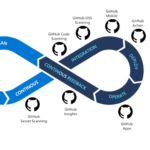
Modern software development is all about speed, automated deployment, and iterative releases. But speed must not come at the expense of security. DevSecOps—integrating security in development and operations—ensures security checks are part of everyday coding and deployment, reducing risk, wasted cost, and compliance headaches. Building security into CI/CD pipelines also means vulnerabilities get caught early, reducing remediation effort and boosting business continuity.
SAST vs. DAST: Key Concepts
Static Application Security Testing (SAST)
SAST tools scan your source code or binaries without executing them, identifying code-level vulnerabilities (like buffer overflows or injection flaws) before apps are ever run. They’re ideal for catching issues early and giving pinpoint feedback to developers, ensuring software is robust before it’s compiled or deployed.
Main Benefits: Early detection, precise location of issues, can be automated in CI/CD and within IDEs.
Main Pitfalls: False positives, limited insight into runtime behavior or configuration issues, dependent on language support and proper setup.
Dynamic Application Security Testing (DAST)
DAST solutions test running applications from the outside, probing for security flaws like XSS and authentication weaknesses. They are language-agnostic and simulate real-world attacks, making them perfect for end-to-end security acceptance.
Main Benefits: Finds runtime and environment flaws, no need for source code, tests as an attacker would.
Main Pitfalls: Longer execution time on large apps, can miss issues hidden in unused code paths, sometimes high false positive rates, needs well-configured environments.
Business Benefits of SAST and DAST
- Reduce risk and cost by catching vulnerabilities before deployment
- Automated compliance with regulations through continuous scanning and reporting
- Build customer trust by securing data and enforcing privacy
- Boost delivery speed with automated feedback and integration in CI/CD
- Comprehensive coverage by using both SAST (internal issues) and DAST (external threats)
Popular SAST Tools: Open Source & Commercial
| Tool | Type | Supported Languages | Benefits | Pitfalls |
|---|---|---|---|---|
| SonarQube | Open Source / Commercial | C/C++, Java, Python, Go, JS, etc. | Fast scans, broad language support, integrates with CI/CD and IDEs, strong code quality rules | False positives, less effective on config issues, feature set limited in community edition |
| Semgrep | Open Source | Python, Java, JS, Go, C/C++ | Speedy scans, highly customizable rules, lightweight to setup in CI, good for custom code patterns | Tuning required for large projects, false positives/negatives with limited rulesets |
| CodeQL (GitHub) | Open Source / Free for OSS | C/C++, Python, Java, JS, Go | Integrated in GitHub Actions, advanced queries, good developer documentation | Complex queries need expertise, setup can be tricky off GitHub, limited to supported languages |
| Checkmarx | Commercial | Java, JS, C/C++, Python, Go, etc. | In-depth scans, strong compliance features, scalable to large enterprises | High cost, lengthy scan times, tuning needed for false positives |
| Fortify | Commercial | C/C++, Java, Go, Python, JS, etc. | Enterprise support, detailed remediation guidance, strong reporting | License fees, integration complexity, UI can be overwhelming |
| Coverity | Commercial / Free for OSS | C/C++, Java, Python, JS, Go | Accurate scans, suitable for safety-critical codebases, free for open source projects | Analysis depth can slow down CI, commercial dashboard is pricey |
| Bandit | Open Source | Python | Simple install, good for CI/CD and Python microservices | Limited to Python, some custom flaws missed |
| ESLint (with security plugins) | Open Source | JavaScript/TypeScript | Real-time error flagging in IDEs, good for team code standards | Limited to JS/TS, needs additional plugins for security |
| FindSecBugs/SpotBugs | Open Source | Java | Wide range of security bug detection, integrates with Maven/Gradle builds | Some rules outdated, limited for new Java features |
| PVS-Studio | Open Source / Commercial | C/C++, C#, Java | Deep analysis, good false positive filtering, supports large legacy codebases | Resource intensive, commercial version has more features |
| Gosec | Open Source | Go | Tailored to Go syntax, easy GitHub Actions integration | Limited to Go, developer must tune rules |
Top DAST Tools: Open Source & Commercial
| Tool | Type | Supported Targets | Benefits | Pitfalls |
|---|---|---|---|---|
| OWASP ZAP | Open Source | Web/REST APIs (all languages) | Free, powerful, active community, includes automatic and manual scanning | Can be slow on big apps, false positives, setup complexity for advanced use |
| Burp Suite | Commercial / Free Community | Web/REST APIs (all languages) | User-friendly UI, deep scan features, great for manual pen testing | Commercial version costs, some automation limitations in free edition |
| Arachni | Open Source | Web/REST APIs | Fast scans, high customization, free for most uses | Project less actively maintained, limited advanced features |
| StackHawk | Commercial / Free for OSS | Web apps/APIs (all languages) | Optimized for CI/CD, modern API coverage, free for OSS/single app | Full features gated to paid version, can require config expertise |
| Invicti (previously Netsparker) | Commercial | Web/REST APIs (all languages) | Strong automation, compliance-ready reports, scalable for large orgs | High cost, learning curve for configuration |
| Akto | Open Source / Commercial | APIs | Automated API discovery, high test coverage, free for OSS | Limited UI polish, advanced features require commercial purchase |
Approximate Pricing: SAST & DAST Tools (1 User vs 10 Users)
| Tool | Type | 1 User (Per Year, USD) | 10 Users (Per Year, USD) | Notes |
|---|---|---|---|---|
| SonarQube | SAST | $400 | $2,500 | Open Source free up to 5 users, Team/Enterprise plans scale up |
| Semgrep | SAST | $240–$480 | $2,400–$4,800 | Free tier available, paid plans $20–$40/user/month |
| CodeQL (GitHub Advanced Security) | SAST | $588 | $5,880 | About $49/month per active committer |
| Checkmarx | SAST | $1,000+ | $10,000+ | Contact sales for exact quotes |
| Burp Suite Pro | DAST | $449 | $4,490 | Annual subscription per user |
| OWASP ZAP | DAST | $0 | $0 | Free and open source |
| StackHawk | DAST | $600 | $6,000 | Approx. $50/month per app or user |
| Indusface WAS Advanced | DAST | $708 | $7,080 | $59/month per user (Advanced Plan) |
| Tenable Nessus Pro | DAST | $4,390 | $43,900 | $4,390/year per seat |
Prices are for basic/commercial plans, billed annually. Many tools offer volume discounts or free trials; enterprise feature sets may cost more. Always confirm with vendor for the latest pricing.
Best Tool Selection by Language
- C/C++: SAST: SonarQube, CodeQL, Coverity, PVS-Studio; DAST: ZAP, Burp (test web APIs written in C/C++)
- Python: SAST: Bandit, Semgrep, SonarQube, CodeQL; DAST: ZAP, StackHawk, Akto
- Java: SAST: SonarQube, FindSecBugs, CodeQL, Checkmarx; DAST: ZAP, Burp, StackHawk
- Go: SAST: Gosec, SonarQube, Semgrep, CodeQL; DAST: ZAP, Akto
- JavaScript/TypeScript: SAST: ESLint (with plugins), Semgrep, SonarQube, CodeQL; DAST: ZAP, Burp, StackHawk
Real-World Cases & Examples
- GitHub: Uses CodeQL in its CI/CD pipelines for scanning millions of open source repos. This has flagged vulnerabilities such as secret leaks and insecure patterns in major libraries—see GitHub blog.
- Park ‘N Fly: DAST integrated into build pipelines helped automate security for kiosk systems, resulting in early discovery and fix of critical authentication flaws—learn more in AIMultiple DAST case study.
- Open Source Python Project: Bandit is used in hundreds of microservices to flag insecure crypto and hardcoded credentials—see Bandit on GitHub.
Integrating SCA, SAST, DAST into CI/CD Pipelines
Add SCA (Software Composition Analysis) tools like Snyk, Mend, or WhiteSource to automate dependency and license scanning.
Run SAST tools on every code commit or pull request, with blocking rules for severe issues and feedback loops for developers. Connect agent-based SAST scanning to popular CI platforms like GitHub Actions, GitLab CI, or Jenkins.
Configure DAST tools to scan staging endpoints on every build/deploy, integrating with Jira or Slack for issue tracking.
For example, CodeQL and Bandit can run in GitHub Actions using simple YAML steps (see previous article), while ZAP or Akto plug into CI workflows for dynamic API or UI endpoint testing.
Challenges and Solutions: Common Pitfalls
- False Positives: Use rule tuning and prioritize findings; combine SAST and DAST for context-aware alerts.
- Language Support: Choose tools tailored for your stack and supplement generic tools with language-specific ones (Bandit for Python, Gosec for Go).
- Performance: Break up scans into incremental jobs for large repos, automate resource management with parallel jobs.
- Lack of Dev Buy-in: Select developer-friendly tools (IDE plugins, inline remediation), educate teams with training and clear, actionable feedback.
- Keeping Coverage: Mix open source and commercial tools, use tools with active community support and continuous updates for new vulns.
Future Trends in SAST / DAST
- AI-powered scans: Enhanced pattern recognition and auto-remediation (like Mobb).
- Multi-language support: Tools increasingly support polyglot stacks and container images.
- Shift-Left and Shift-Everywhere: Deeper integration from developer IDE to runtime observability platforms.
- Automatic code fixes: Remediation pull requests generated directly from scan results.
Conclusion: Key Takeaways
SAST and DAST tools are essential ingredients for building secure software in every modern business. Open source and commercial solutions provide automation, speed, and real-world relevance—especially for today's multi-language teams. Choose tools best suited for your stack, integrate them early and often, and make security a routine part of your DevOps. The time invested pays off in safer products, happier users, and resilient, sustainable business.
Next Steps
Want expert advice on choosing and implementing SAST/DAST for your business? Contact us today for personalized DevSecOps solutions!
References & Further Reading
- OWASP: Source Code Analysis Tools
- OWASP: Free for Open Source Application Security Tools
- CircleCI: SAST vs DAST: When to Use Them
- AIMultiple: DAST Use Cases
- Bandit Security Scanner (Python)
- Mend.io: Best SAST Tools
- GitHub: CodeQL now available for free
- Book: "DevSecOps: A Leader’s Guide to Security Integration" by Jim Bird
- Book: "The DevOps Handbook" by Gene Kim, Jez Humble, Patrick Debois, John Willis