The pressure on software delivery leaders is unyielding. Directors and Managers across sectors-from finance to healthcare, SaaS to embedded systems-face the imperative to deliver software faster, better, and more reliably. The stakes? Market share, customer satisfaction, innovation pace, and ultimately, business survival.
This blog distills a strategic, executive-focused blueprint built around 12 critical systems that have proven to triple software delivery speed within 90 days, while safeguarding quality and operational stability. Backed by research from the 2024 DORA report and real-world case studies from tech giants like Amazon, Netflix, and Microsoft, this guide will equip you with the insights and actionable steps to propel your delivery organization into the elite tier of software excellence.
Why Speed Matters – The Executive Imperative
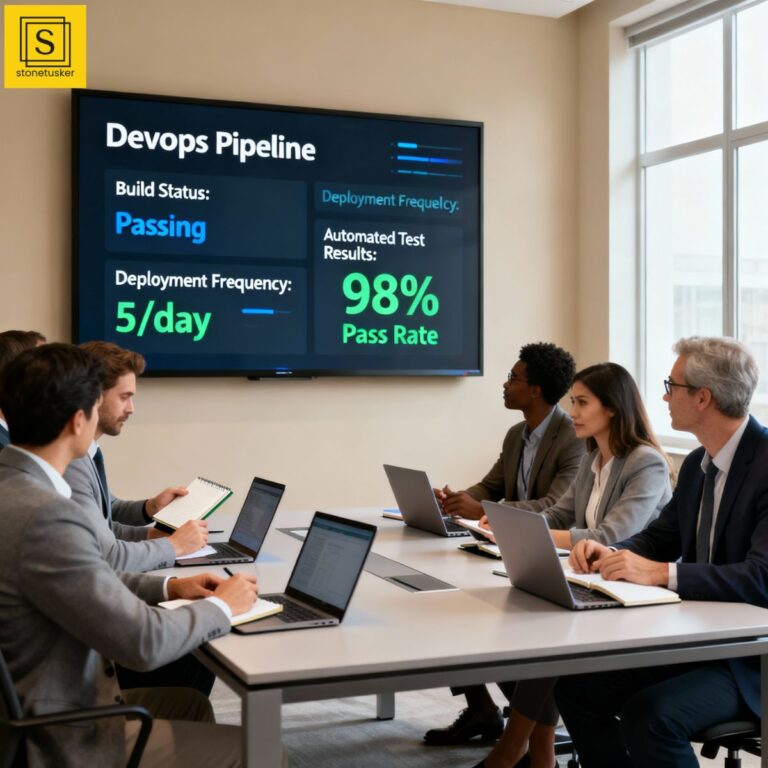
The 2024 DevOps Research and Assessment (DORA) report remains the gold standard for understanding high-performing software delivery organizations. It highlights four key metrics that define elite performance:
- Deployment Frequency – How often new code is released to production
- Lead Time for Changes – Time from code commit to deployment
- Change Failure Rate – Percentage of deployments causing failures
- Time to Restore Service – How quickly failures are recovered from
Amazon, for instance, deploys code every 11.7 seconds, enabling near-real-time iteration and unmatched responsiveness to market demands. If your organization still measures deployment velocity in weeks or months, you’re exposing yourself to significant risk-lost opportunities, cost overruns, and customer dissatisfaction.
Speed is not just a technology metric. It’s a business imperative that translates to faster time-to-market, quicker feedback from customers, lower delay costs, and higher team morale. For executive leadership, this becomes the foundation of resilient competitiveness and strategic agility.
Understanding Real-World Bottlenecks
Decades of consulting and industry research reveal recurring delivery inhibitors that plague organizations regardless of size or sector:
- Vague or unaligned requirements prone to rework
- Long-lived code branches creating integration chaos
- Slow, manual code reviews blocking progress
- Unstable development and staging environments
- Manual testing and slow build pipelines
- Weak observability resulting in slow defect detection
- Siloed teams and fragmented toolchains causing friction
The key to unlocking rapid delivery isn't chasing every shiny new tooling trend but systematically addressing these bottlenecks through a well-architected set of interlocking systems.
The 12 Systems Blueprint
1. Requirements Flow System
Problem: Ambiguous, shifting requirements that cause bottlenecks and rework.
Solution: Build a clear, value-driven flow from business idea to production backlog with empowered teams and continuous refinement.
- Define "ready for development" checklists covering scope, dependencies, and testability.
- Visualize value stream handoffs and queue times for transparency.
- Empower teams to make trade-offs aligned with business outcomes.
- Measure backlog-to-commit times and rework percentage.
2. Branching & Code Integration System
Problem: Long-lived branches and large merges delay integration.
Solution: Adopt trunk-based development with automated merge validations and frequent small integrations.
- Enforce policies limiting feature branch lifespan to less than a day.
- Automate branch builds to catch integration issues early.
- Promote incremental changes with regular pull requests.
- Track average branch lifetime and merge conflicts.
3. Code Review Acceleration System
Problem: Slow and inconsistent code reviews cause frustration and delays.
Solution: Set service levels for reviews and leverage automation for trivial checks.
- Service targets like first review within 4 hours and merges same day.
- Use linting, static analysis, style enforcement to reduce manual effort.
- Empower developers to merge autonomously when criteria met.
- Monitor review turnaround and rework counts.
4. Environment & Infrastructure System
Problem: Environment provisioning delays and configuration drift cause defects.
Solution: Manage infrastructure as code (IaC), provide self-service environments, and enforce drift detection.
- Use Terraform, Ansible, or cloud-native IaC tools.
- Offer ephemeral, production-like environments on demand.
- Automate policy compliance and drift alerts.
- Measure provisioning time and drift incidents.
5. Automated Testing System
Problem: Manual testing cycles create feedback delays and flaky test results.
Solution: Shift left, automate widely, employ test data management and environment simulation.
- Define targeted automation coverage for critical flows.
- Parallelize tests via cloud or test-lab infrastructure.
- Continuously validate with simulated test environments.
- Track test suite runtime and flaky test rates.
6. Build & CI Performance System
Problem: Slow builds and queues degrade developer productivity.
Solution: Streamline builds with caching, parallelism, incremental builds, and bottleneck removal.
- Set build feedback goals under 5 minutes.
- Employ caching and job parallelization extensively.
- Break monolithic tests into smaller units.
- Monitor average build time and blockage frequency.
7. Deployment & Release Automation System
Problem: Manual release processes and high-risk deployments.
Solution: Harness automated pipelines with progressive delivery and rollback capabilities.
- Eliminate manual scripts and human dependencies where possible.
- Use canary, blue-green, and feature flags to reduce risk.
- Automate safe rollback and recovery.
- Measure deployment lead time and rollback rates.
8. Observability & Feedback System
Problem: Limited visibility leads to slow failure detection and resolution.
Solution: Build full-stack observability integrating logs, metrics, and traces; feed data back into delivery and product teams.
- Implement tools like Prometheus, Grafana, Datadog.
- Adopt SLO/SLI practices with team accountability for quality.
- Track MTTR and change failure rate.
- Use feedback loops for ongoing improvement.
9. Security & Compliance Automation System
Problem: Security reviews and compliance audits slow releases.
Solution: Embed security early with automated scans and policy-as-code.
- Integrate SAST/DAST in CI pipelines.
- Automate compliance enforcement with Open Policy Agent (OPA) or similar.
- Maintain audit logs and governance dashboards.
- Reduce manual security gates and late defects.
10. Developer Experience System
Problem: Setup delays, context switching, and tool fragmentation reduce dev productivity.
Solution: Provide frictionless environments, self-service infrastructure, and standard tools.
- Document and automate onboarding for “first build success in under 1 hour.”
- Standardize dev tool chains and reduce sprawl.
- Offer sandboxes for experimentation without heavy overhead.
- Measure cycle time, context switches, and onboarding time.
11. Cross-Functional Collaboration System
Problem: Siloed teams cause handoffs, delays, and miscommunication.
Solution: Create stable, value-stream aligned cross-functional teams with shared goals.
- End-to-end feature ownership including dev, QA, Ops, and security.
- Define shared KPIs aligned to business outcomes.
- Hold joint retrospectives focusing on flow and improvement.
- Track handoffs and cycle times per feature.
12. Metrics & Governance System
Problem: Gut feel decisions and manual gating limit agility.
Solution: Build metrics-driven governance, linking engineering data to business KPIs and automating decision workflows.
- Adopt DORA four key metrics as delivery baseline.
- Create dashboards connecting engineering metrics to revenue, churn, etc.
- Automate governance with policy engines and value-stream insights.
- Measure governance efficiency and exception rates.
Practical Examples & Case Studies
Retail - Walmart: Walmart transformed its e-commerce platform by adopting a DevOps culture that focused on automation, continuous testing, and streamlined deployments. Through the creation of internal developer platforms and real-time monitoring using tools like Splunk and Datadog, Walmart significantly cut down deployment times and improved system reliability, enabling rapid response to fluctuating market demands especially during peak sales seasons. (How Walmart Scaled Hygieia to 5,000+ Dashboards - Medium)
Telecommunications - AT&T: AT&T adopted DevOps combined with agile practices to modernise its software delivery for network management and customer services. By integrating infrastructure as code and continuous delivery pipelines with robust security automation, they reduced release cycle times dramatically while ensuring high availability for critical telecom services used by millions globally. AT&T’s investment in cross-functional teams empowered faster innovation and execution. (AT&T Cloud-First Transformation - Microsoft Customer Story)
Energy - Shell: Shell implemented DevOps and cloud-migration strategies to improve software delivery in its complex energy trading and exploration systems. Using Kubernetes for container orchestration and GitOps for automated deployments, Shell increased delivery agility while maintaining stringent compliance with environmental and safety regulations. Their investment in observability and automated security scanning improved fault detection and reduced downtime. (Digitalisation at Shell - Shell.com)
Healthcare - Cerner Corporation: Cerner, a leading healthcare-technology company, leveraged DevOps to accelerate the delivery of electronic health record (EHR) systems. By adopting continuous integration and continuous delivery (CI/CD) pipelines, automating infrastructure provisioning with Terraform, and embedding automated security checks early in the development cycle, Cerner improved deployment frequency and drastically reduced lead times. This transformation enabled faster rollout of critical healthcare-software updates, directly improving patient care and regulatory compliance. (Cerner Official Site)
Banking & Finance - Capital One: Capital One revolutionised its software delivery by embracing DevOps and cloud-native approaches on AWS. They used automated pipelines incorporating security scanning and rigorous governance policies as code. A platform-engineering team built self-service environments, enabling developers to deploy new features rapidly while maintaining strict financial-compliance controls. The result was faster time-to-market for customer-facing innovation and improved operational resilience in a highly regulated sector. (Capital One on AWS - AWS Case Study)
Implementing the Blueprint in 90 Days: Step-by-Step Guide
Weeks 0-4: Kick off with Requirements Flow and Branching & Integration systems. Align leadership, identify bottlenecks, and define KPIs.
Weeks 5-8: Deploy foundational automation systems for environments, builds, testing, and releases. Track metrics diligently.
Weeks 9-12: Scale Developer Experience, Collaboration, Observability, Security, and Governance systems. Embed continuous improvement cycles.
Latest Tools & Frameworks to Leverage
- Infrastructure as Code: Terraform, Ansible, AWS CloudFormation
- CI/CD Pipelines: Jenkins, GitHub Actions, GitLab CI, Argo CD
- Observability: Prometheus, Grafana, Datadog, OpenTelemetry
- Security Automation: Open Policy Agent, HashiCorp Sentinel
- Value Stream & Metrics: HCL DevOps Velocity, DORA tooling
- Feature Flags & Progressive Delivery: LaunchDarkly, Split.io, Flagger
- Developer Platforms: Internal Developer Portals, self-service sandboxes, cloud dev environments
Challenges & Solutions Practitioners Face
- Cultural Resistance: Combat with executive sponsorship and early pilot wins.
- Tool Sprawl: Consolidate and standardize tooling stacks.
- Measurement Disconnect: Integrate DORA metrics linked to business outcomes.
- Environment Instability: Use IaC and self-service environments to prevent drift.
- Security Bottlenecks: Shift-left security with automated scans and policy-as-code.
- Scaling Enterprise-wide: Establish platform engineering support teams.
Future Outlook & Emerging Trends
Generative AI + DevOps: AI aids code generation and operations but requires strong foundations to avoid instability.
Platform Engineering: Internal developer platforms will scale velocity across enterprises.
Resilience Engineering: Chaos engineering and proactive observability will become standard to handle distributed architectures.
Business-Aligned Metrics: Engineering KPIs will be tightly linked to revenue, customer retention, and time-to-value.
Security-as-Code: Continuous compliance and policy enforcement in pipelines will replace end-of-cycle gating.
Conclusion
Tripling your software delivery speed in 90 days is an ambitious but achievable goal by systematically adopting the 12 systems outlined here. The blueprint focuses on removing real-world bottlenecks through strategic process improvements, automation, culture shifts, and metrics-driven governance. Giants like Amazon, Netflix, and Microsoft have demonstrated how sustained investment in engineering systems creates game-changing agility and resilience. But it’s not just the tech giants fast-moving startups like Stripe, Datadog, GitLab, and Airbnb, as well as mid-size innovators like Shopify, Atlassian, HashiCorp, and Snowflake, have shown that high-velocity delivery is possible at any scale when the right frameworks and practices are embedded into the organization.
You could be a key player for this transformation. Start small, measure relentlessly, and scale fast. The future is fast-ensure your teams are ready to deliver at pace.
Ready to accelerate your delivery pipelines and triple your software velocity? Contact us today and let Stonetusker guide your DevOps transformation journey.
-