
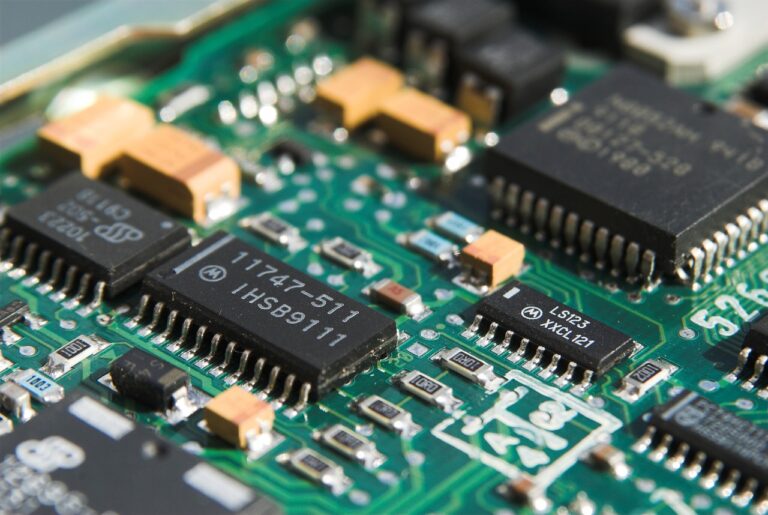
Embedded systems quietly power almost everything around us-from smartwatches and routers to cars, factories, satellites, and AI devices. At the heart of each system sits a processor or System‑on‑Chip (SoC) that balances performance, power, cost, and reliability for a specific job.
This article gives you a clear, human‑friendly overview of the processor and SoC landscape across industries. It includes not just MCUs and mobile chips, but also AI accelerators (NPUs, TPUs), DSPs, FPGAs, ASICs, and other modern processing units.
1) What is an embedded system?
An embedded system is a small, specialized computer built into a larger product to perform dedicated tasks. Unlike PCs, embedded systems are designed for:
- Low power use (especially in battery‑powered devices)
- Fast, predictable responses (real‑time behavior)
- High reliability and safety (often in harsh environments)
- Tight cost and size constraints
- Deep hardware–software integration
Examples of embedded systems:
- Smartphones, smart TVs, wearables
- Cars, drones, and industrial robots
- Industrial machines, PLCs, and factory sensors
- Medical devices and diagnostic equipment
- Routers, switches, and 5G base stations
- Game consoles, smart cameras, and edge AI boxes
Behind almost all of these sits a processor or SoC doing the real work.
2) Processor types and architectures (the basics)
2.1 Major instruction‑set architectures (ISAs)
Arm (dominant in embedded and mobile)
- Cortex‑M: microcontrollers for IoT, sensors, and simple control systems.
- Cortex‑R: real‑time processors for automotive and safety‑critical ECUs.
- Cortex‑A: application processors for Linux/Android‑class devices.
- Neoverse: designs for cloud, networking, and edge servers.
Arm IP is used by Apple, Qualcomm, Samsung, MediaTek, NXP, STMicro, Renesas, Broadcom, NVIDIA, AWS, and many others.
RISC‑V (open, growing fast)
- An open ISA used in MCUs, tiny IoT, and custom accelerators.
- Supported by SiFive, Espressif, Andes, Alibaba (T‑Head), Microchip, and Intel Foundry flows.
- Increasingly used in automotive, AI accelerators, and research chips.
x86 (high‑performance, legacy‑friendly)
- Intel Atom, Core, Xeon; AMD Ryzen Embedded, EPYC.
- Used in embedded PCs, industrial automation, edge servers, and some gaming and networking appliances.
Legacy and niche ISAs
- MIPS: still found in routers and legacy embedded gear.
- PowerPC: used in aerospace, avionics, and older consoles.
- AVR: core of many Arduino boards.
- 8051: common in industrial control and legacy MCUs.
- DSP‑specific ISAs: e.g., TI C6000 family and CEVA cores for audio, radio, vision.
2.2 Processor types by role (CPU, GPU, NPU, TPU, DSP, etc.)
This table shows the main processor families and where they show up.| Processor type | What it does | Typical use cases |
|---|---|---|
| MCU (Microcontroller Unit) | Low‑power controller with on‑chip memory and peripherals. | IoT nodes, sensors, appliances, simple control loops. |
| CPU (General‑purpose Central Processing Unit) | General‑purpose core that runs OS and mixed workloads. | System control, mixed compute, non‑accelerated AI. |
| GPU (Graphics Processing Unit) | Parallel processor for graphics and compute. | UI, gaming, vision, some AI training and inference. |
| DSP (Digital Signal Processor) | Optimized for real‑time audio, radio, radar, and image processing. | Audio, telecom, radar, sensor signal chains. |
| NPU (Neural Processing Unit) | Embedded or mobile accelerator for AI inference. | Edge AI, mobile perception, ADAS, smart cameras. |
| TPU (Tensor Processing Unit) | Domain‑specific ASIC for tensor operations (matrix multiplications). | Cloud‑scale AI training and large‑scale inference (e.g., Google Cloud). |
| ASIC (Application‑Specific Integrated Circuit) | Custom chip built for one specific job (networking, storage, AI, etc.). | Switch ASICs, Edge TPUs, custom accelerators, some automotive SoCs. |
| FPGA (Field‑Programmable Gate Array) | Reconfigurable logic that can be turned into custom accelerators. | Prototyping, telecom, aerospace, hardware acceleration. |
| IPU and others (e.g., Intel Gaudi, Graphcore, etc.) | AI‑ or data‑specific accelerators for training and inference. | Large models in data centers and cloud AI platforms. |
In modern SoCs, many of these are combined into one chip: CPU cores, GPUs, DSPs, NPUs, and sometimes even small ASIC‑style blocks or FPGA‑like fabric.
3) Modern SoC architecture (what’s inside)
| SoC block | What it does |
|---|---|
| CPU clusters | Groups of cores (performance + efficiency) for general‑purpose tasks. |
| GPU | Handles graphics, UI, and some compute workloads. |
| NPU / DSP | Accelerates AI inference and signal processing. |
| Memory controllers | Interfaces for DDR, LPDDR, and sometimes HBM. |
| Connectivity | Wi‑Fi, Bluetooth, 5G, Ethernet, and other I/O blocks. |
| Security engines | Secure boot, hardware keys, encryption engines, TEE. |
| I/O interfaces | USB, PCIe, CAN, SATA, camera, display, and sensor interfaces. |
The SoC also integrates power management, clocks, and buses so all these blocks can share data and run efficiently at low power.
4) Embedded SoCs across industries
| Industry | Common SoCs / processors | Typical products |
|---|---|---|
| Mobile & consumer | Snapdragon, Apple A/M, Exynos, Dimensity | Phones, tablets, smart TVs, home hubs |
| Automotive | NVIDIA DRIVE, NXP S32, Mobileye EyeQ, Renesas R‑Car | ADAS, central compute, infotainment, EV control |
| Industrial & robotics | TI Sitara, STM32MP, NXP i.MX, Intel Atom, AMD Ryzen Embedded | PLCs, HMIs, robots, gateways, factory edge servers |
| Networking & telecom | Broadcom ASICs, Marvell OCTEON, Neoverse‑based SoCs | Routers, switches, 5G base stations |
| Data center & cloud | Intel Xeon, AMD EPYC, NVIDIA Grace, specialized TPUs/IPUs | Servers, AI clusters, cloud training and inference |
| Gaming & consoles | Custom AMD APUs, NVIDIA Tegra | PlayStation, Xbox, Nintendo Switch |
| IoT & edge AI | ESP32, Raspberry Pi SoCs, NVIDIA Jetson, many MCUs with NPUs | Smart sensors, edge AI cameras, small robots |
| Aerospace & medical | PowerPC, safety‑MCUs, FPGAs, ASICs | Avionics, flight control, diagnostic and imaging systems |
Many of these SoCs include NPUs or DSPs for AI and signal processing, while some products also connect to cloud TPUs or IPUs for heavier workloads.
5) Major embedded and AI‑chip companies
| Category | Examples |
|---|---|
| General semiconductor giants | Intel, AMD, NVIDIA, Qualcomm, Samsung, MediaTek, Broadcom, Marvell |
| Embedded specialists | NXP, STMicroelectronics, Texas Instruments, Renesas, Infineon, Microchip |
| Emerging & AI‑focused | Apple, Google, Huawei, SiFive, Ampere, Tenstorrent, AI‑chip startups |
6) Software stacks in embedded systems
| Layer | Examples | Purpose |
|---|---|---|
| Operating systems | Bare metal, FreeRTOS, Zephyr, QNX, Embedded Linux, Android | Task scheduling, driver management, resource control |
| Toolchains | GCC, Clang, LLVM, Keil, IAR, vendor SDKs | Compiling, linking, and debugging embedded code |
| Middleware & AI frameworks | TensorFlow Lite, ONNX Runtime, OpenCV, ROS 2, vendor‑specific runtimes | AI, vision, robotics, connectivity, edge inference |
7) Key trends shaping embedded processors
| Trend | Impact |
|---|---|
| AI everywhere | NPUs become standard in mobile and edge SoCs; TPUs and IPUs grow in cloud. |
| RISC‑V growth | Open ISA used more in MCUs, accelerators, and domain‑specific chips. |
| Chiplets | More modular, heterogeneous SoC designs mixing process nodes and IP blocks. |
| Edge computing | More intelligence pushed to devices, reducing cloud dependency. |
| Automotive centralization | Cars moving from many ECUs to fewer powerful central SoCs. |
| Security‑first design | Hardware‑rooted trust, secure boot, and crypto engines become standard. |
| AI accelerator diversity | NPUs, TPUs, DSPs, and FPGAs all used for different AI workloads. |
8) A simple mental model of processors
| Level | Processor / approach | Examples |
|---|---|---|
| Tiny brains | Small MCUs and basic controllers | STM32, PIC, AVR, ESP32, safety‑MCUs |
| Smart brains | SoCs with CPUs, GPUs, DSPs, NPUs | Snapdragon, Exynos, i.MX, Jetson, automotive SoCs |
| Super brains | Server‑scale chips and AI accelerators | Xeon, EPYC, Grace, TPUs, IPUs, large GPUs |
9) Why this landscape matters
Choosing the right processor or SoC affects everything: performance, power, cost, security, and time‑to‑market. Embedded systems are no longer just simple controllers; they are becoming intelligent, connected, AI‑driven platforms. The processor you choose is the foundation for that shift.
When you understand the roles of CPUs, MCUs, GPUs, DSPs, NPUs, TPUs, FPGAs, and ASICs, you can better match hardware to your product’s real‑world needs-on the edge, in the cloud, or in between.
References and further reading
Arm - architecture and IP overview
RISC‑V Foundation - home of the open ISA
CPU vs GPU vs TPU vs NPU explained
Types of embedded microprocessors and architectures
CPU, GPU, IPU, NPU, TPU, MCU, SOC, DSP, FPGA, ASIC explained